|
|
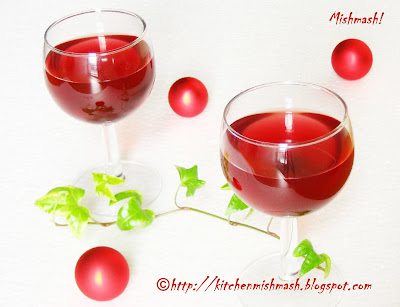 Till that day the word ‘wine’, to me , was associated with my mother’s ceremonial soaking of some fruits in a brown colored earthenware, Bharani and the occasional stirring and the day my father helped her to strain the fermented juice into glass bottles using a funnel…….until that day , it was that fancy bottle my father’s friends gifted us during the Christmas season……until that day, it was that intoxicating sweetened drink that was served in a tiny stemware, at the Christian wedding receptions immediately after the toast, along with a square piece of fruit cake wrapped in parchment paper and sealed in the centre………
…..but that day, sometime in the first few months of my stay in this country, our friend poured wine into my glass…… the moment I sipped , I knew I was experiencing a phenomenon called ‘taste-shock’…….it was red wine but it was nothing like the one etched in my memories……contrary to the sweet red wine my mother made , this one tasted different….I was not sure if it was bitter or some other taste…….it was sharp and strange……I tried to take one more sip but couldn’t …….it was not just the wine that tasted different…..the wine glass also looked strange in size ….till that day I was used to drinking wine in what can be called a miniature version of the stemware we find in America………the one in which we served wine was tinier than a tequila shot glass….and that’s the day I realized the world of wine and the taste of wine, outside my small state in the southern tip of India, has a whole new spectrum I was not familiar with……..and later, after two years, on a wine tasting tour in California I discovered a variety called dessert wine which came close to the taste of my childhood and adolescence and slowly I started enjoying wine in this country :)Nevertheless, a craving for the sweet wine my parents made dominates me towards the end of every year. When it is time to think about X’mas and when it is time to relish fruit cake I miss the taste and smell of the of the wines my parents made each year with grapes, pineapple, cashew apples and beetroot. As part of starting our own X’mas traditions, year before last, me and CJJ set two batches of wine; one with Beetroot and another with Pineapple and this year, we tried with grapes and since it has turned out so well, I thought of sharing the recipe with you. Recipe Source: Molly Joseph, Bangalore; published in Kerala Magazine, Vanitha, November 2007 issue. Original recipe has been halved to suit my needs.Ingredients: - ½ kg dark blue or purple or black, seedless grapes (I used California grapes)
- 5 ½ (1 kg) cups sugar
- Half of one egg white, beaten
- 1tsp Yeast ( I use Fleischmann's active dry yeast)
- ¾ cup (125 gm) wheat kernels/Godhambu
- 19 cups water (2.25 litres), boiled and cooled completely
Directions:- Get an earthenware, Bharani or big glass/ ceramic jar /container thoroughly washed.
- Separate grapes from its stalks and wash nicely. With your hand, crush the grapes thoroughly till it starts releasing juice. Add all the other ingredients along with crushed grapes to the Bharani or big glass/ ceramic jar /container and close with the lid. You may place a large piece of cloth on top of the lid and tie it airtight.
- For the next 20 days, open the Bharani or big glass/ceramic jar /container everyday and stir well with a wooden spoon. The crushed grapes will remain floating on top for the first two weeks and by the end of third week, you will notice them setting to the bottom of the jar and settling on top of the wheat kernels.
- On the 21st day, strain the grape mixture using a muslin/cheese cloth or any thin cotton fabric; transfer the liquid to another Bharani or big glass or ceramic jar /container .
- After 2 days, you will notice sediments at the bottom of the jar; strain this again, using a muslin/cheese cloth or any thin cotton fabric and pour it into clean glass bottles. As the days go by you might notice some sediments at the bottom of the bottle too; so while pouring be careful not to disturb the clouded sediments settled at the bottom.
- In Kerala these wines are served along with a slice of fruit cake during the X’mas season but you can serve this as apéritif too. If taken in small amounts, it is also good for digestion after a festive meal.
Don’t have colour? If the wine does not have color (it depends on the type of grape you use) , add little caramel , until you get the desired depth of colour , without making the wine overly sweet. This is a technique generally followed in Kerala homes to colour the wine if it lacks that dark red shade. But I haven’t tried this technique and hence not sure how much of caramel is required and whether it changes the taste of wine or not. I used a variety called, California grapes which has produced this gorgeous colour. Please keep in mind that it is the skin of the grapes that decides the colour of the wine. I have given recipe and directions for making caramel in my last year’s post on Kerala Fruit Cake /Plum Cake; you may refer the same.I know many of you are busy with the last minute menu planning for the Thanksgiving dinner and it is too early to even think of X’mas but certain preparations like setting the wine and soaking fruits for the plum cake has to be done way in advance. So, those who have not yet soaked the fruits for fruit cake, please do it atleast this week. Last year, I had received lot of queries asking for the availability of tutti-frutti in US and I thought of making a small note here that it has started appearing in the baking aisles of the supermarkets and shops like, Walmart has set up an aisle specially for baking goods for the holiday season. Look for a brand called, SUN-RIPE fruit mix which is mix of candied orange and lemon peels, cherries et al. Those who are looking for the Kerala fruit cake recipe, please go through the recipe I have posted, in detail as well as the updates and the answers I have given in the comment section of the same post as I find it difficult to answer the same question again and again, which I have cleared for the previous readers. Still, if you have queries, please feel free to drop a line in the comment section, I am more than happy to help you :)Related Posts:
LuvShn
|
No part of the content ( articles, photographs, recipes) of this blog may be reproduced without my written permission.Copyright © 2007-2010 Kitchenmishmash.blogspot.com. All rights reserved.
|

Spring is here and winter is bidding adieus! Poets’ two favourite seasons to metaphorically drive home the idea that adversities and prosperities of life are seasonal. How can one forget the lines of P.B Shelley, one of the English romantic poets who wrote “O, wind, if winter comes, can spring be far behind?” How true !! It is again reinstated when Hal Borland quotes, “No winter lasts forever; no spring skips its turn.” Isn’t it so synonymous with the dull days and happy days of life that come and go? Spring is the renewal of life and hopes and somewhere I read, "winter is door to spring...its a resurrection of hope " . I don’t think I can sum up this concept in any better way than these wise men did. Well, its time to talk about March winds, April showers and May flowers….spring cleaning and spring blossoms……the thought itself is quite refreshing ,isn’t it? :) But honestly, I do enjoy the winter days too, even though we all grumble about removing the pile of snow from the driveway and the slick roads and the icy winds and the dull days. It makes me all romantic, when the star shaped snow flakes tickle my face….waking up in the morning to see the nature covered under a soft, silky white blanket of snow…….the pine trees holding the snow flakes…goose walking across a frozen lake……the eerie look of the naked trees…..somewhere I see a pristine beauty during this season…..and one of those days I was lucky to capture a shot of this natural snow grotto that formed in a lake in our community. Thought it’s incredible and felt only a Virgin Mary is missing in there ;)
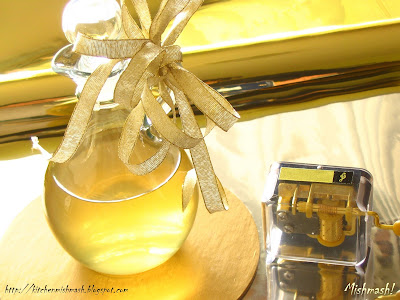
Now coming to the substance…. Well, I had a grin on my face when I read that pineapple was the chosen fruit for this month’s AFAM because I had something ready in my pantry, waiting for its turn to go into the spotlight! I am talking about "bottled poetry" here, yes, Pineapple Wine :) This is something I tried along with my experiments with Beetroot wine, which is my personal favourite as I get to enjoy the beet wine from the 16th day after its fermentation, where as I have to wait for more than 3 months to pour some of the bottled pineapple wine into my wine glass. And this recipe is for those who have the patience to wait that long and let me assure you, it’s worth the wait :)
Ingredients:
- 1 kg fresh ripe Pineapple
- 1 kg (50 oz) Sugar
- 1 tsp Yeast
- ½ tsp sugar
- 1 small Lemon
- 2 litre Water
- ½ cup warm water
Directions: - Dissolve yeast in lukewarm water with ½ tsp sugar and let it rise.
- Wash the pineapple well and dice them into small pieces. No need to remove the skin.
- Boil 2 litres of water in a big pan and dilute 1 kg sugar. When the water boils well, add the pineapple chunks and let it cook for not more than 4-5 mins and turn of the stove.
- When it cools down, transfer it preferably to a Bharani or any earthenware container or a glass jar and add the dissolved yeast and lemon juice and stir well with a wooden spatula and keep the container airtight and store it in a dark place, for fermentation for 21 days. On the 4th or 5th day, open the container and stir it with a wooden spatula and let it rest till the 21st day.
- After the fermentation process, strain it, without squeezing or crushing the pineapple at all, using a cheesecloth or muslin cloth on the 21st day and make sure that there are no residues; bottle the wine and rack them at room temperature in a cupboard and let it rest for 3 MONTHS allowing it to settle all the impurities and smells FRESH & PLEASANT at the end.
Tips:
Once the wine is bottled, it should be left in a dark shelf, at room temperature, for 3 months for sure, as the smell that results from the activation of the yeast with the pineapple is very overpowering and it is not at all suggested for serving during this time. Also, for the yeast to convert sugar into alcohol, it is mandatory to keep the oxygen out and hence make sure that container is airtight, during the fermentation period. The alcoholic and the mild fizzy effect also depend on the quality of the yeast used. Please ensure that the fermentation jars and bottles are clean and not filled fully; leave some room. It is also suggested to open the bottles once in 2-3 weeks to let the gas out, formed inside the bottles. After 3 months, you will notice all its impurities settling down, creating a thick layer at the bottom, and the wine will be refined and clear and smells fresh and pleasant and tastes GREAT!
So, lets pour some wine and raise a toast to Maheswari for hosting this wonderful fruity event,AFAM and also to Sushma for hosting the interesting Monthly Cooking Tipology event!
Related Posts:
Cheers!
Shn
|
No part of the content ( articles, photographs, recipes) of this blog may be reproduced without my written permission.Copyright © 2007-2010 Kitchenmishmash.blogspot.com. All rights reserved.
|
"Wine is bottled poetry."Robert Louis StevensonYes it is !! I had been on wine country and wine tasting tours a couple of times last year. Now I have become a huge fan of dessert wines/Sweet wines. But a nostalgia engulfs me whenever I stroll through the wine section of supermarkets; the flavour of that sweet wine I tasted years back, at a Kerala-christian wedding, rushes back followed by a strange craving for the sweet wine my mother makes….Finally, I decided to take a risk. It was X’mas time and I tried my mother’s recipe for Beetroot wine; it turned out to be a great hit ! The beauty is that none can guess its beetroot as it’s quite fruity in aroma and flavour. Many of our friends raved a lot about it and you believe it or not, I did get some calls asking for more wine!!!! So here’s your chance to fetch some compliments; the recipe follows:
Ingredients: (Approx.)Beetroot : 1 kgSugar : 1 kg (50 oz)Yeast : 1 tspLemon : 2 small onesWater : 3.5 litresCinnamon : 3-5 small sticksClove : 7nosWarm water : ½ cupDirections :1. Wash the beetroots and peel off the skin and finely grate them.
2. Dissolve yeast in lukewarm water with ½ tsp sugar and let it rise.
3. Boil 3.5 litres of water in a clean saucepan.
4. Add the grated beetroot to the boiling water and leave it till it cooks.
5. When the beetroot is cooked, turn off the stove and once it is lukewarm, strain the mixture preferably to a Bharani or any earthenware container or a glass jar and leave the grated portion. Use a cheesecloth or muslin cloth for straining the liquid.
6. Once you are done with straining, add the sugar and dilute well with a wooden spatula; then add the squeezed lime juice and the dissolved yeast. At this stage, add the cinnamon sticks and cloves as well.
7. The container should be airtight and store it, in a dark space, for fermentation for 15 days. On the 4th or 5th day, open the container and stir it with a wooden spatula and let it rest till the 15th day.
8. After the fermentation process, strain it once more to make sure that there are no residues and bottle the wine and rack them at room temperature in a cupboard.
9. Serve with a fruit cake and a smile :)
Tips:The colour of the wine will be exactly that of the beetroot used; So make sure that good quality beetroots are used. Also, for the yeast to convert sugar into alcohol, it is mandatory to keep the oxygen out and hence make sure that container is airtight. The alcoholic and the mild fizzy effect also depend on the quality of the yeast used. Please ensure that the fermentation jars and bottled wines are not filled fully; leave some room. Once they are bottled, it can be used any time; it’s better not to age this particular wine as the colour may be compromised and taste also changes. The sweetness of the wine is as per our family choice; you are free to increase or decrease the quantity of sugar but I suggest doing that only after your first trial as you get an idea how much to change and can make adjustments accordingly next time. Related Posts:
|
No part of the content ( articles, photographs, recipes) of this blog may be reproduced without my written permission.Copyright © 2007-2010 Kitchenmishmash.blogspot.com. All rights reserved.
|
|
|
|
|


 All text and Photographs are copyright protected.
Copyright © 2007-2010
Kitchenmishmash.blogspot.com. All rights reserved.